

Attention as Currency
How Digital Environments Shape Taste, Perception, and Research

Ugh… I’m exhaling as I begin this letter not because I’m unsure of what to say, but because there is too much to say. This is the part of the process most internet researchers rarely admit: the challenge isn’t generating ideas; it’s navigating the speed at which they arrive, and the inevitable tab-collecting that follows.
By the way, I’ve found Sublime.app incredibly helpful for organizing thoughts. As someone with ADHD, it’s been a genuine life changer.

This letter looks closely at how attention functions in digital environments — how it shapes perception, taste, and the internal architecture of research. Rather than treating attention as a psychological trait, we’re approaching it as a system: something structured, conditioned, and instrumental in how culture now forms.
Consider this a small syllabus for what follows:
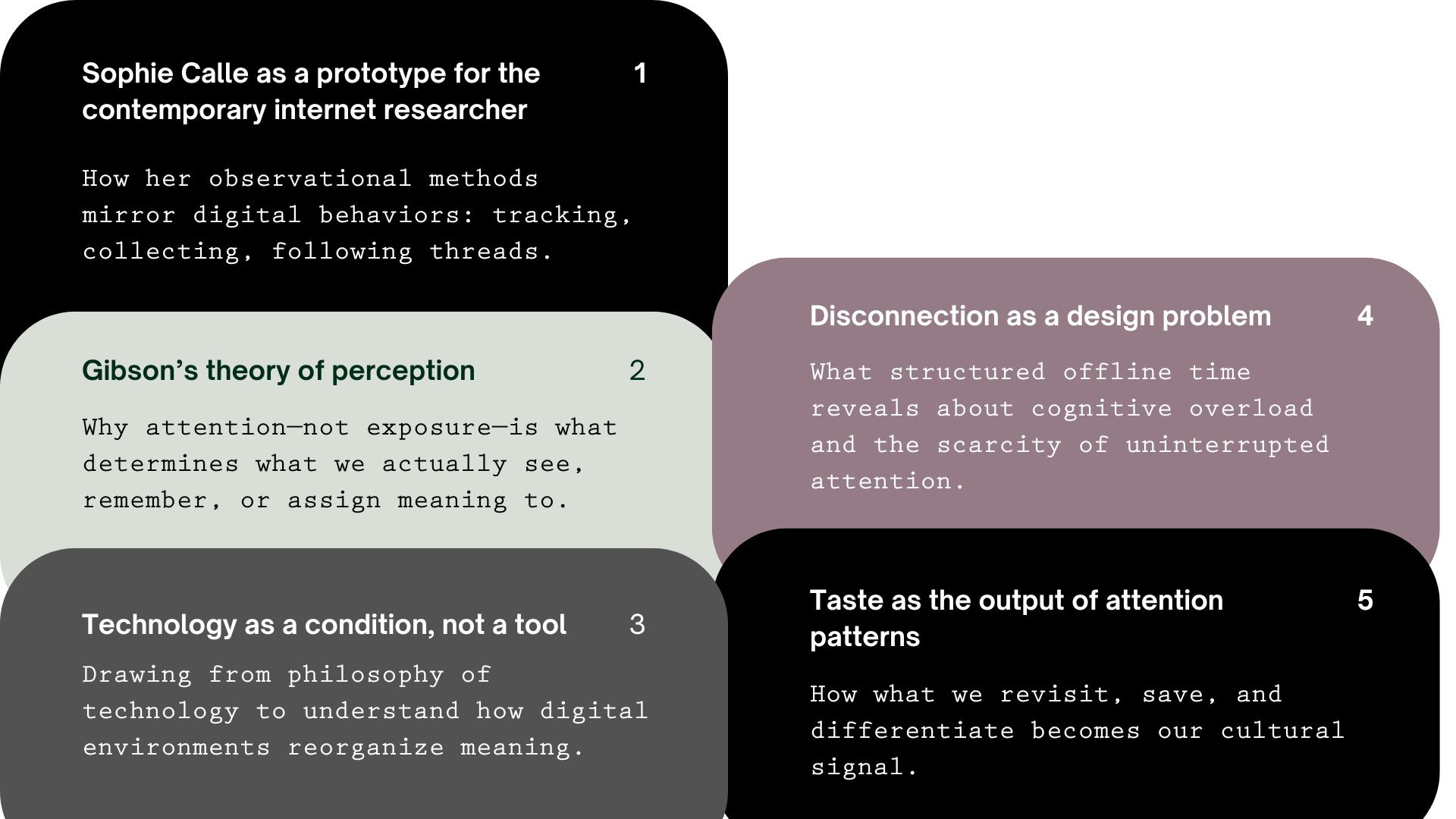
Everything in this letter builds toward a single premise:
our attention what we notice, return to, and differentiate has become the most consequential cultural act we perform.
Sophie Calle and the Architecture of Attention
(Post-Internet → Meaning through Continuous Engagement)
I’ve been thinking about Sophie Calle this week not for the provocative narratives often attached to her work, but for the structure of her attention. In Suite Vénitienne, she follows a man through Venice, documenting his movements through photographs and notes. The significance isn’t in the pursuit, but in the method:
observing without expectation
tracking without conclusion
collecting without resolving
building meaning through fragments
This mirrors how we navigate digital environments today: following threads, saving screenshots, gathering references, assembling constellations of meaning from incomplete information.
Gene McHugh writes in Post-Internet that contemporary meaning isn’t produced through singular frameworks but through continuous engagement the repeated attempt to locate coherence in an ever-shifting informational landscape. Calle feels like the pre-digital prototype of this research logic.
Attention as Perception
(Gibson → Differentiation, Affordances, and the Work of “Seeing”)
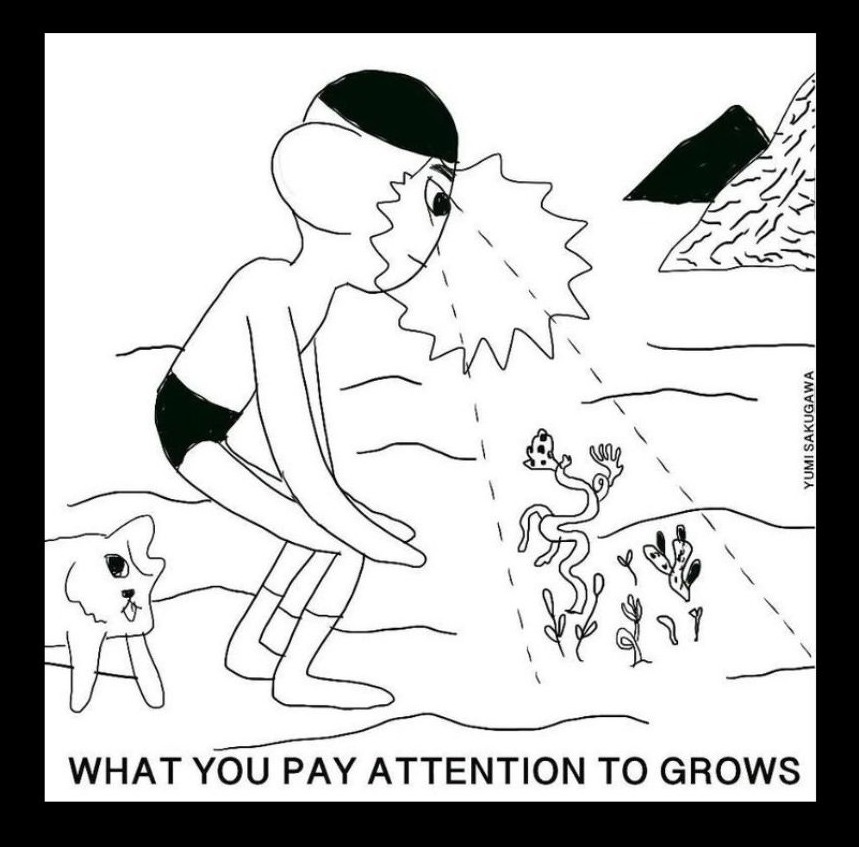
To understand why attention matters, I turned to James J. Gibson’s The Perception of the Visual World. Gibson argues that perception is not passive; it is differentiated.
We don’t learn to perceive—we learn to discriminate.
This becomes crucial in digital environments where exposure is constant. Attention is the mechanism that decides:
what becomes reference
what becomes noise
what becomes pattern
what becomes irrelevant
Gibson’s idea of affordances is equally relevant. The world presents itself in terms of what it invites us to do: paths afford movement, edges afford boundaries, objects afford grasping.
Digital platforms are entirely affordance-driven:
feeds afford scrolling
grids afford collecting
emptiness affords archiving
timestamps afford revisitation
metrics afford comparison
Attention is not neutral. It is engineered by the environments we inhabit.
Technology Isn’t Neutral
(Philosophy of Technology → Concepts as Tools, Context as Meaning)
In A Companion to the Philosophy of Technology, the authors argue that seeing technology as “applied science” is no longer enough. That model assumes neutrality but today’s digital systems are anything but neutral.
Technology today:
reorganizes cognition
shifts ethics
reframes perception
shapes cultural logic
determines what becomes visible
John Dewey’s instrumentalism deepens this: concepts themselves are tools. We shape ideas, but ideas also shape us, because as Dewey argued concepts emerge from the environments we live in and act back upon them.
He saw ideas as instruments that reorganize how we think, perceive, and behave, which is why his work is often used to explain how technology and attention aren’t just “things we use,” but systems that transform how culture and meaning are produced. Meaning emerges through use, not abstraction. And onlinewhere context is fluid and endlessly shifting attention becomes the stabilizing mechanism, the tool that creates momentary coherence.
Designing for Disconnection
Parallel to these thoughts, Nobody Knows Studio is working on a brand identity project oriented toward the opposite idea: designing for accessible disconnection, intentional pause, and more present living. The goal is to help people unplug for up to five hours a day and measure that time with the same clarity we apply to steps or sleep.
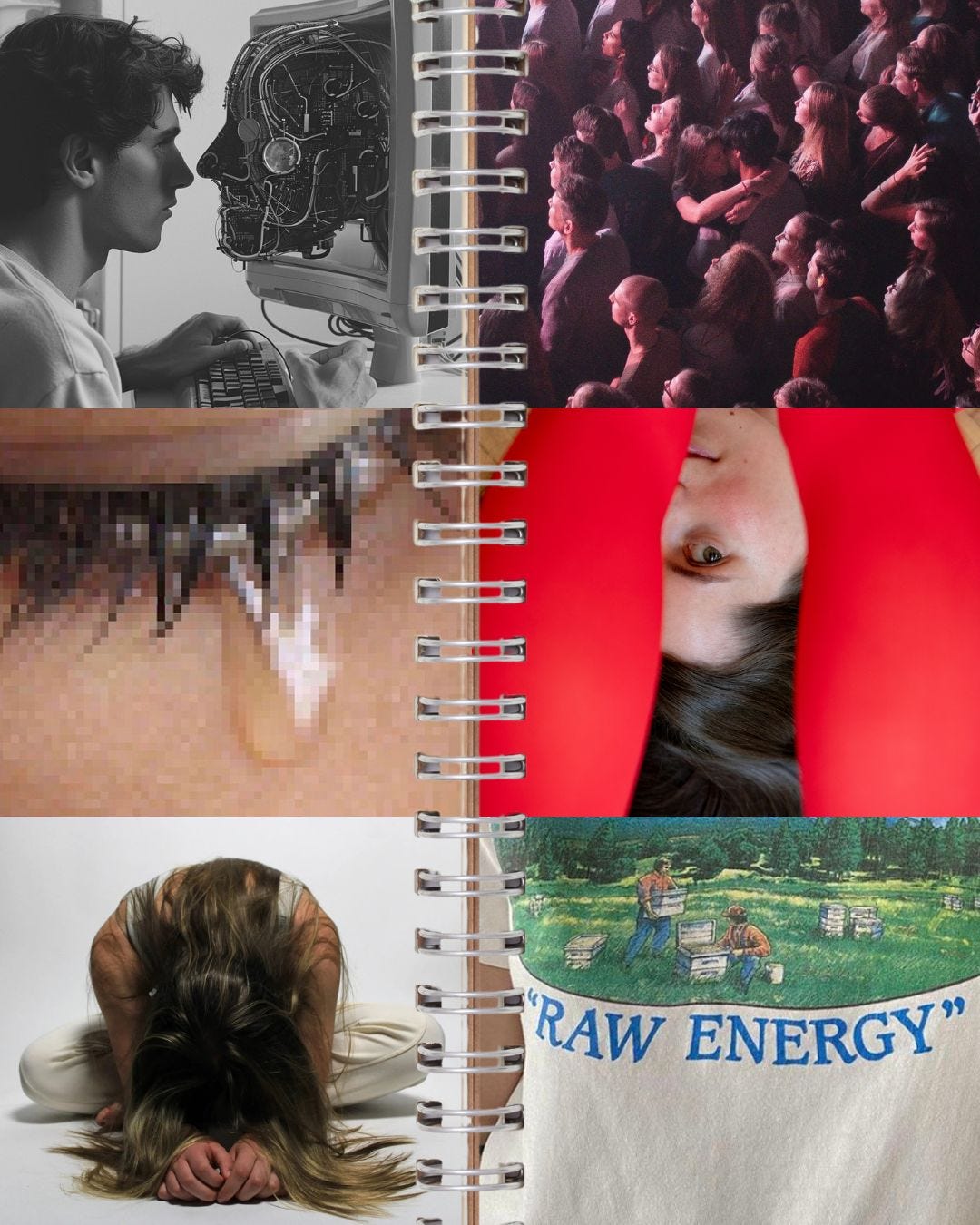
Working on this surfaced a personal tension for me.
I like the internet—the small parallel world I’ve built alongside my actual life. But what I don’t like is the isolation embedded in that behaviour. I’m constantly “researching,” which is inherently solitary. In a way, that’s why I started Internet Researcher: to turn private attention into something shareable, to make an identity out of a process that usually stays hidden.
(Also our dad hats are now on Metalabel and Nobody Knows Studio
Online Behaviour Is Cultural Behaviour
(Library Ideas → Research as Shared Infrastructure)
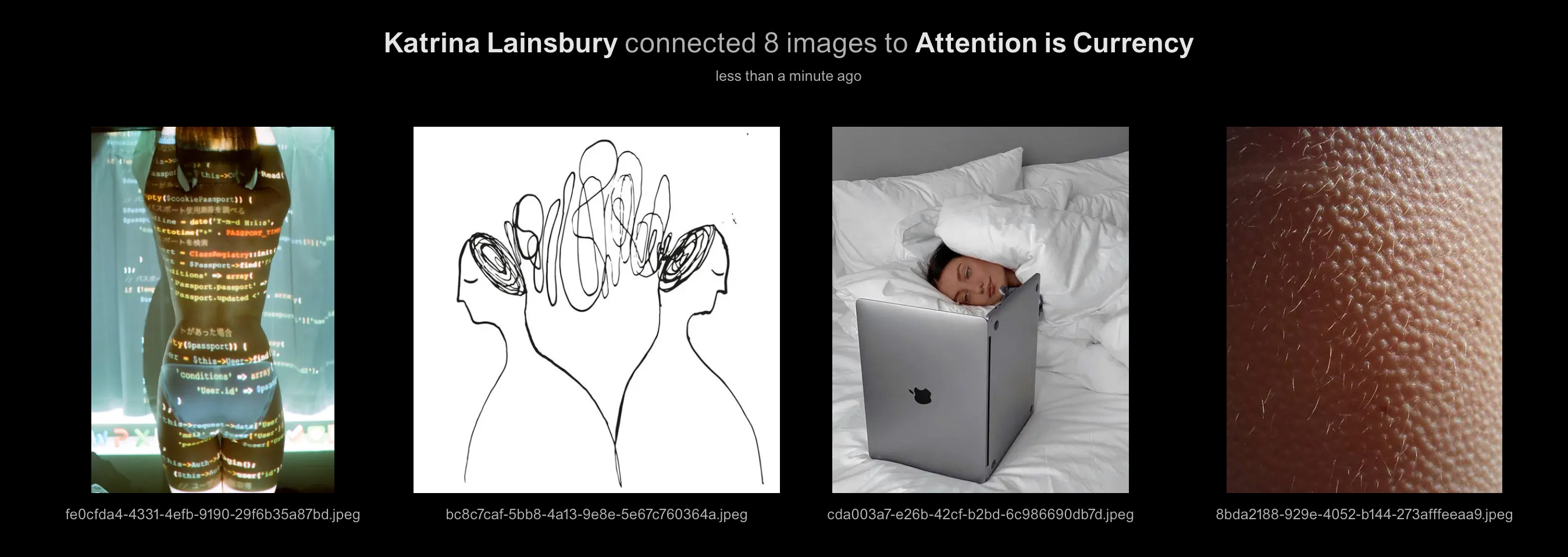
Our digital habits form patterns:
what we save
what we revisit
what we return to after months
what we archive privately
what repeats
This is why I return to Are.na so often: no algorithm, no metrics, no performance layer. I’d also recommend reading A Handbook of Library Ideas, which frames research as a shared infrastructure a system for organizing communal meaning, not just private accumulation.
Your saved images become your internal library.
Your library becomes your language.
I’ve created a small visual archive for this letter: Attention is Currency — it’s still a working archive, but it extends everything here.
How Taste Forms Online
INPUT → EXPOSURE
         |
         v
 ATTENTION (What we notice)
         |
         v
 SELECTION (What we save)
         |
         v
REVISITATION (What returns)
         |
         v
PATTERN RECOGNITION (Emerging themes)
         |
         v
     TASTE (Internal architecture)
Just wanted to say thank you for all of the love on the last letter. Friendly reminder that today is the last day for the giveaway, so go figure out what that is.
For anyone who reads this. Thank you.
-Katrina
there something very grounding about the way you treat attention. not as an optimizable personal failing, but as a shared cultural architecture we're all quietly building. it makes my own chaotic pile of screenshots and saved posts feel less like noise and more like a living archive in progress...
I love how you connect taste to the tiny micro-choices of noticing and collecting. It's exactly how being on a non-optimized online space feels.
this made me think consider my own digital habits not as distractions but as the raw material of sense-making. beautifully put.
Love using the framework of an artist's process to think about how we approach the internet. I've always thought the French writer Annie Ernaux is on the pursuit of something similar to Sophie Calle. She constantly explores similar themes in slightly different styles throughout her work – the way we pin similar photos or save similar Instagram posts to affirm and work out our taste. I'm halfway through her book 'Uses of Photography' where she writes short chapters in reference to photos she's taken with her lover – a parallel to Instagram captions?